About Twin lobe Air Blower
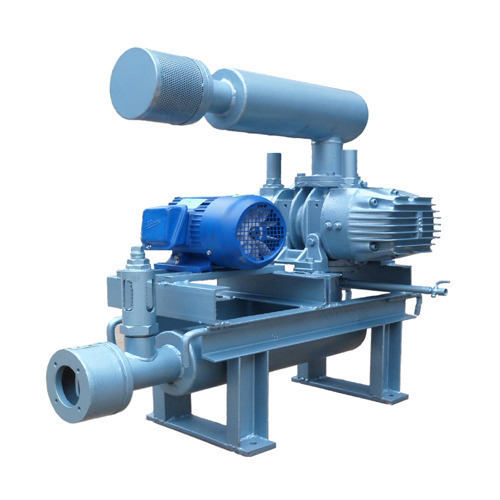
A twin lobe air blower, also known as a twin-screw blower or roots blower, is a type of positive displacement blower used for various applications in industries such as wastewater treatment, pneumatic conveying, and power generation. It consists of two counter-rotating lobes or rotors housed within a casing. The lobes have a unique helical shape that intermeshes without touching each other, creating a series of air pockets.
When the lobes rotate, they trap and compress air between them and the casing. This trapped air is then forced out of the blower at a higher pressure and flow rate than the incoming air. Twin lobe air blowers are known for their ability to generate high volumes of air or gas at relatively low pressures.
These blowers are often preferred for applications requiring constant and consistent airflow, as they provide smooth, pulse-free operation. They are also known for their reliability, efficiency, and relatively low maintenance requirements compared to other types of blowers.
Standard Design & Constructional Features:
Applications
Technical Specifications
|
Material
|
Cast Iron
|
|
Voltage
|
220V
|
|
Rated Power
|
1-1.5kW
|
Robust Construction for Demanding ApplicationsDesigned with a powder-coated cast iron, MS, or stainless steel body and impellers made of SG iron, the Twin Lobe Air Blower ensures dependable operation and long service life, even under harsh conditions. Its bi-lobe rotor and oil-sealed or mechanically sealed design guarantee consistent performance in continuous duty cycles. With a lifespan of approximately 10 years, it excels in applications ranging from wastewater treatment to pneumatic conveying.
Flexible Operation and InstallationSupporting both V-belt and direct coupling drive types, this blower accommodates various installation requirements. With an operating ambient temperature range from -10C to +50C and base-mounting for secure placement, it adapts to diverse industrial spaces and conditions, making it an excellent choice for manufacturers and process plants.
FAQs of Twin lobe Air Blower:
Q: How does the twin lobe air blower operate in various industrial applications?
A: The twin lobe air blower generates pulsating air by rotating bi-lobe rotors, providing reliable airflow and pressure. Its design makes it suitable for uses such as wastewater treatment, pneumatic conveying, aeration, and chemical processes, ensuring consistent performance in demanding scenarios.
Q: What is the process for installing and mounting the blower?
A: This blower is base-mounted, making installation straightforward. Simply secure the unit on a flat, stable foundation using bolts. It can be connected to pipes with 50 mm to 300 mm inlet/outlet sizes. Both V-belt and direct coupling options are available for flexible integration with your existing motor setup.
Q: When should routine maintenance be performed on this blower?
A: Routine maintenance, such as checking and refilling the oil (capacity 1.2-2.5 liters) and inspecting seals, should be performed every 23 months during continuous operation to maximize lifespan and efficiency. Splash lubrication keeps internal parts running smoothly with minimal intervention.
Q: Where can the twin lobe air blower be used most effectively?
A: The blower is widely used in wastewater treatment plants, pneumatic conveying systems, aeration tanks, and chemical processing industries, particularly where low-noise operation (below 85 dB) and robust performance are required.
Q: What are the key benefits of using this blower in a system?
A: Key advantages include continuous duty rating, reliable performance under variable temperatures (-10C to +50C), long service life (up to 10 years), low noise, and versatile application options. The powder-coated finish and quality materials reduce corrosion and wear, ensuring durable operation.
Q: How does the cooling system work in this air blower?
A: The blower is air-cooled, meaning that it dissipates heat through airflow around its body, eliminating the need for water-based cooling systems. This simplifies operation and reduces both maintenance and installation costs.






 Send Inquiry

 Send Inquiry


